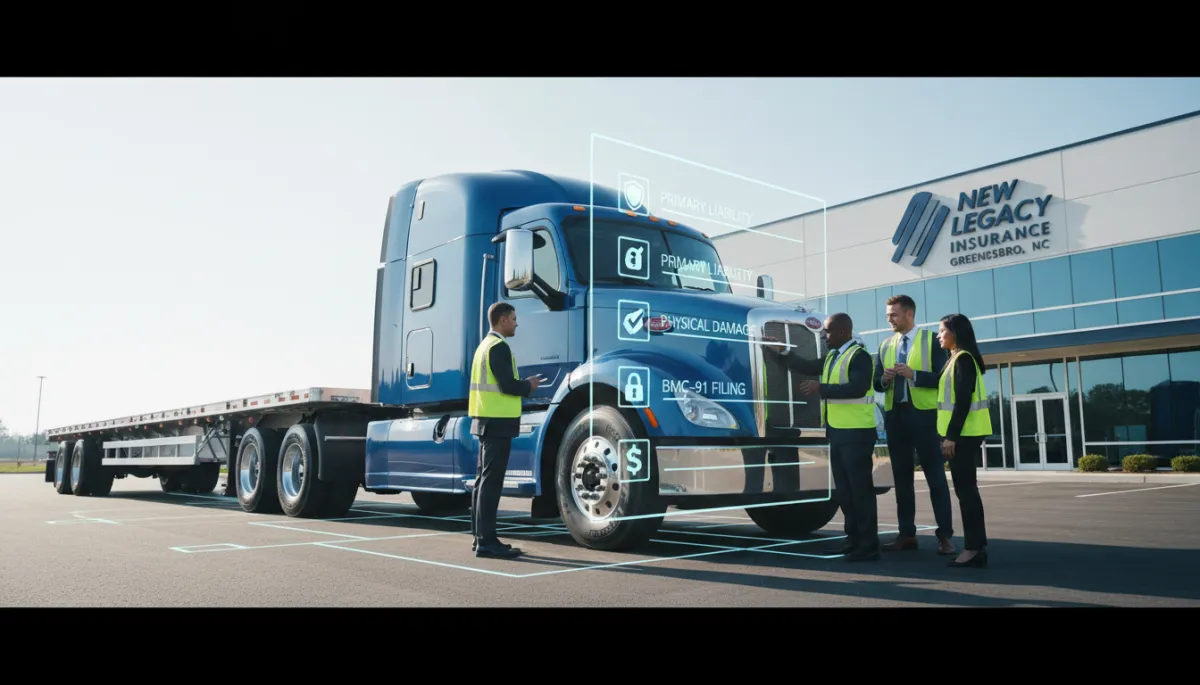
New Trucking Authority Insurance Checklist
Trucking Insurance, New Authority, Owner-Operators
New Trucking Authority Insurance: The Complete Checklist
Getting your first USDOT and MC number is a big step. The next one is just as important: putting the right insurance in place so your authority actually activates, you can book loads, and you’re protected on the road. This complete checklist breaks down new trucking authority insurance in plain language, with a focus on owner-operators and small fleets based in North Carolina and across the Southeast.
Why Insurance Matters So Much for New MC Numbers
When the FMCSA issues your new authority, it’s not automatically active. You must meet specific FMCSA insurance requirements and have proof on file before you can legally haul freight for hire across state lines. Until your insurer files the proper forms, your status will sit in limbo and brokers won’t touch you. That’s why understanding MC number insurance early can save you weeks of frustration and lost revenue.
1. Legally Required Insurance to Activate Your MC Authority
The FMCSA requires every for-hire interstate motor carrier to carry public liability insurance (often called primary auto liability). This covers bodily injury and property damage you cause to others in an accident. The minimum limits depend on what you haul, based on 49 CFR Part 387 (ecfr.io and fmcsa.dot.gov):
$750,000 – General freight (non-hazardous property). This is the most common minimum for dry van, reefer, and flatbed carriers not hauling hazmat.
$1,000,000 – Non-bulk hazardous materials, certain oil and petroleum products, and other listed hazmat categories.
$5,000,000 – High‑risk hazardous materials (for example, explosives, some radioactive materials, or poison gas).
Passenger carriers have their own limits ($1.5M–$5M depending on seating), but most new owner-operators starting with freight will fall into the $750,000 or $1,000,000 category. Your policy must also include the MCS‑90 endorsement, which your insurer adds automatically when they file with FMCSA.
📌 Key Takeaway: Without the correct primary liability limit for your cargo type, FMCSA will not activate your authority—no matter what else you’ve done.
2. What Brokers and Shippers Expect Beyond FMCSA Minimums
The legal minimum is one thing. The real world of load boards and freight contracts is another. Many brokers and shippers now require:
$1,000,000 in primary liability even for general freight, because $750,000 hasn’t changed since 1985 and verdicts have gone way up (otrucking.com).
$100,000 in motor truck cargo coverage (sometimes $150,000–$250,000 for higher-value freight like electronics or pharmaceuticals).
General liability (often $1,000,000 per occurrence) for slip-and-fall and premises-type claims at docks and warehouses.
If you only buy the bare FMCSA minimum, you may technically be legal—but you’ll struggle to get decent loads. A good new trucking authority insurance plan is built not just for compliance, but for marketability.
3. Understanding the BMC‑91 Filing Process
Once you choose a policy, you don’t send your insurance paperwork to FMCSA yourself. Your insurer does that through a BMC‑91 filing (or BMC‑91X if multiple insurers share the risk). This filing is FMCSA’s proof that you carry at least the required public liability limit (legalclarity.org).
Match your records: Your policy must show the exact legal name, USDOT number, and MC number on file with FMCSA. Even a missing “LLC” can delay activation.
Your insurer files electronically: New Legacy Insurance submits the BMC‑91 directly through FMCSA’s system as soon as your policy is bound.
Allow 24–72 hours to post: Filings usually appear in the FMCSA Licensing & Insurance system and SAFER database within 1–3 business days, though weekends and holidays can slow it (fleetguardusa.com).
If your BMC‑91 isn’t on file within the FMCSA’s deadline (often around 20 days after your authority is granted), they can dismiss your application and eventually revoke it. That’s why having an agency that files quickly and correctly is critical in those first few weeks.

Accurate BMC‑91 filings help your new authority go active without costly delays.
4. Don’t Forget Your BOC‑3 Filing
Insurance alone won’t flip your authority to “active.” You also need a BOC‑3 filing—your designation of process agents in each state. This tells FMCSA who can accept legal papers on your behalf if you’re ever sued or cited in that state (fastboc3filing.com).
Many compliance companies can file BOC‑3 for you online in a day. At New Legacy Insurance, we regularly walk new carriers through which filings they still need—BOC‑3, UCR, MCS‑150 update, and drug & alcohol testing enrollment—so your authority doesn’t stall out for a missing form.
💡 Pro Tip: Plan your BOC‑3 and insurance filings at the same time. When both are on file, FMCSA can activate your authority much faster.
5. Physical Damage and Cargo: Protecting Your Truck and the Load
Primary liability protects everyone else. Physical damage and cargo insurance protect you.
Physical damage (comprehensive and collision): Covers your tractor and, if owned, your trailer for fire, theft, vandalism, and collision. If your truck is financed, your lender will almost always require this coverage with a specific deductible and loss payee clause.
Motor truck cargo: Covers the freight you’re hauling if it’s damaged or stolen while in your care. Many brokers expect at least $100,000 in cargo, and more for high-value loads (otrucking.com).
A realistic owner-operator insurance checklist for a new authority usually includes:
Primary liability – typically $1,000,000 for better load access
Motor truck cargo – $100,000 or more based on freight type
Physical damage on tractor (and trailer if owned)
General liability – often required by shippers and some facilities
Non-trucking (bobtail) liability if you’re leased on part-time or running under someone else’s authority occasionally
6. How Fast Can New Legacy Insurance Get You Covered?
New authorities pay more for insurance in the first year—often $10,000–$20,000 or more across liability, cargo, and physical damage (rmstruckers.com). But speed and accuracy matter just as much as price when you’re trying to get rolling.
At New Legacy Insurance in Greensboro, NC, we specialize in new trucking authority insurance for owner-operators and fleets up to 20 trucks. In most cases, we can:
Quote your coverage the same day you call
Bind your policy and issue certificates within hours of receiving your paperwork
Submit your BMC‑91 filing to FMCSA and typically have you fully covered and ready to go in 24–48 hours, depending on FMCSA processing times.
We also review your planned lanes and freight so your coverage lines up with what brokers and shippers in your niche are asking for. That way, once your authority flips to active, you’re not stuck turning down loads because of missing endorsements or low limits.
7. Your New Authority Insurance Checklist (Step-by-Step)
Decide what you’ll haul (general freight, reefer, flatbed, hazmat) and where you’ll run.
Confirm your required primary liability limit under FMCSA rules for that freight type.
Call an experienced agency like New Legacy Insurance to quote: primary liability, cargo, physical damage, and general liability.
Bind your policy and confirm your agent will handle the BMC‑91 filing immediately.
File your BOC‑3, register for UCR, and enroll in a drug & alcohol testing program if required.
Watch your status in FMCSA’s SAFER and Licensing & Insurance systems until your authority shows “Active.”
Ready to Put Your New Authority to Work?
You’ve invested in your truck, your MC number, and your future. Now it’s time to make sure one missed detail on the insurance side doesn’t hold you back. Whether you’re a single truck running out of Greensboro or a small fleet expanding across the Southeast, New Legacy Insurance is here to make the process clear and quick.
Talk with a team that understands MC number insurance, FMCSA insurance requirements, and what brokers really look for when they onboard a new carrier. We’ll walk you through every item on your owner-operator insurance checklist and help you get on the road with confidence—usually in 24–48 hours.
📞 Call to Action: To get your new authority covered fast, call (336) 777-6545 today or visit newlegacyinsurance.com to request a quote and speak with a trucking insurance specialist.
META_TITLE: New Trucking Authority Insurance: The Complete Checklist | New Legacy Insurance
META_DESCRIPTION: Learn exactly what insurance you need to activate your new MC authority, meet FMCSA insurance requirements, satisfy brokers, and protect your truck and cargo. New Legacy Insurance in Greensboro, NC helps new owner-operators get covered in 24–48 hours.
