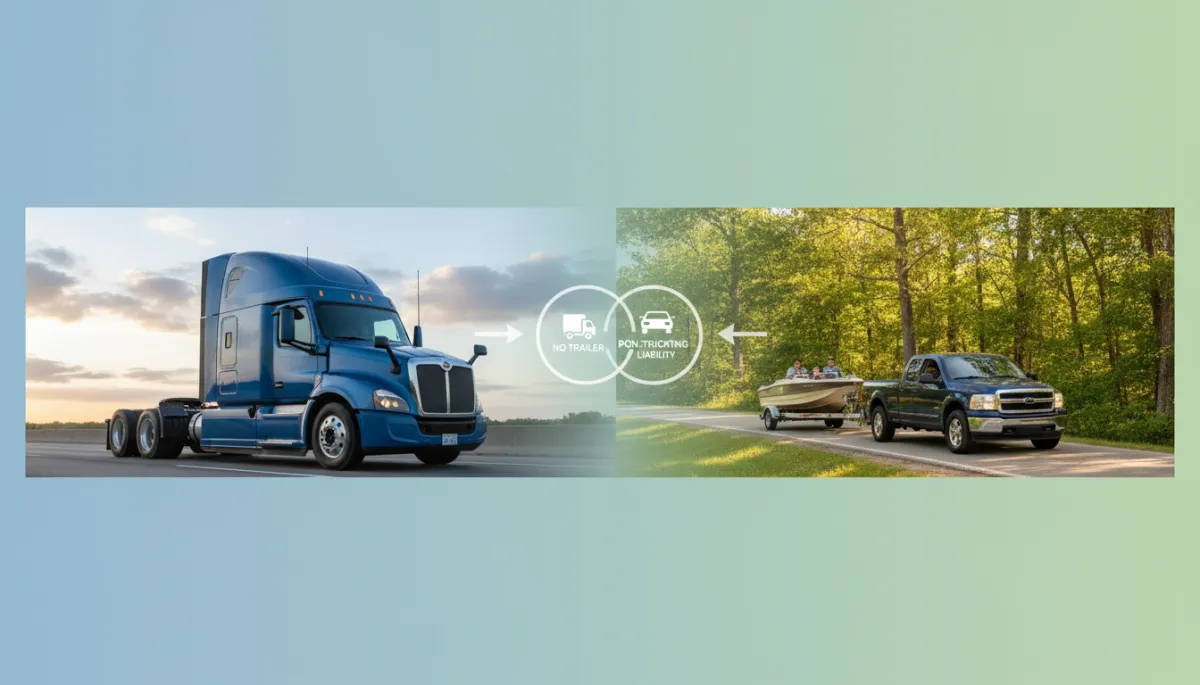
Bobtail vs Non-Trucking Liability Explained
Trucking Insurance, Bobtail Insurance, Non-Trucking Liability
Bobtail vs. Non-Trucking Liability: What’s the Difference?
If you’re an owner-operator or leased driver, you’ve probably heard the terms bobtail insurance and non-trucking liability tossed around. They sound similar, they both have to do with “off-dispatch coverage,” and they’re often required in lease agreements. But they do not cover the same thing—and choosing the wrong one can leave you with expensive owner-operator coverage gaps.
First, a Quick Big-Picture View
When you’re under dispatch and pulling a load for a motor carrier, that carrier’s primary liability policy usually covers you. The confusion starts when you’re:
- Driving the tractor with no trailer attached, or
- Using the truck for personal errands or off-duty driving.
That’s where bobtail insurance and non-trucking liability come in. They’re both designed to protect you when the carrier’s policy doesn’t apply—but they kick in at different times and for different reasons.
What Does Bobtail Insurance Cover?
Bobtail insurance is liability coverage for when you’re driving your tractor without a trailer attached—whether you’re on dispatch or not. The key is the physical setup of the truck: tractor only, no trailer, no load.
Examples of when bobtail insurance can apply:
- You’ve just dropped a trailer at a receiver and you’re driving the tractor back to the yard with no trailer attached.
- You’re heading from the carrier’s terminal to pick up a trailer, but you’re not hooked yet.
- You’re leaving the shop after repairs with just the tractor, no trailer, and you cause an accident.
In all of these, you’re still essentially “in work mode,” but the truck is bobtailing. If your carrier’s policy has gaps in that scenario, bobtail insurance can step in to cover bodily injury and property damage you cause to others.
What Does Non-Trucking Liability Cover?
Non-trucking liability (often called NTL) is different. It’s designed for personal use only—times when you’re driving your truck not in the business of trucking and not furthering the carrier’s business in any way.
Typical non-trucking liability situations might include:
- Driving your tractor home after you’ve been released from dispatch for the weekend.
- Taking the truck to the grocery store, church, or a family event on your day off.
- Running personal errands while you’re off the clock and not under any load or assignment.
Non-trucking liability is still liability coverage—it pays for injuries or damage you cause to others—but it specifically excludes business use. If you’re on your way to pick up a load, repositioning for your carrier, or doing anything that benefits the motor carrier, NTL generally will not respond.
Understanding when you’re truly off-duty is key to choosing the right coverage.
The Key Difference: Use vs. Setup
The easiest way to separate these two in your mind is: bobtail insurance cares about how the truck is configured (no trailer), while non-trucking liability cares about how the truck is being used (personal vs. business).
- Bobtail insurance: Tractor with no trailer, regardless of whether you’re dispatched or off-dispatch.
- Non-trucking liability:Personal use only, whether or not you have a trailer attached, as long as you’re not furthering the carrier’s business.
This is why getting the wrong policy can leave dangerous owner-operator coverage gaps. You might think you’re covered “off-dispatch,” but if the policy doesn’t match how you actually use the truck, a claim could be denied.
Why Leased Operators Need One of These Policies
If you’re leased on to a motor carrier, their primary liability policy is written to protect them while you’re hauling their freight. It’s not designed to protect you when you’re using the truck outside of that business purpose. That’s why leased operator insurance almost always includes either bobtail insurance or non-trucking liability—sometimes both, depending on the setup.
Without the right off-dispatch coverage, you could be personally responsible for:
- Injury claims from other drivers or pedestrians
- Property damage to vehicles, buildings, or roadside structures
- Legal defense costs if you’re sued after an accident
Why the Carrier’s Policy Doesn’t Cover You Off-Dispatch
Motor carriers buy insurance to protect their business while you’re working for them. Once you’re off-dispatch and not furthering their business, you’re no longer operating under the conditions their policy is written for.
Many carrier policies specifically exclude:
- Personal use of the truck
- Bobtailing to or from home, the shop, or another location not under dispatch
- Trips where you’re not operating under their authority or hauling their freight
That’s why relying only on the carrier’s policy is risky. It’s built to protect their liability, not to close all of your personal owner-operator coverage gaps.
How to Know Which Coverage Your Lease Agreement Requires
Every carrier is a little different, so the first step is simple: read your lease agreement carefully. Look for sections labeled:
- “Insurance Requirements”
- “Owner-Operator Responsibilities”
- “Bobtail/Non-Trucking Liability”
Your lease may specifically state that you must carry: bobtail insurance, non-trucking liability, or a certain limit of leased operator insurance that includes one of those. If the language is confusing (and it often is), that’s where a knowledgeable trucking insurance agent can help interpret it and match the right policy to your real-world driving.
Get Help Choosing the Right Off-Dispatch Coverage
At New Legacy Insurance in Greensboro, NC, we work with owner-operators and leased drivers every day who are trying to sort out bobtail insurance vs. non-trucking liability. There’s no one-size-fits-all answer—your carrier’s requirements, your driving habits, and how often you use the truck for personal reasons all matter.
Our job is to:
- Review your lease and explain exactly what it requires in plain language
- Identify any off-dispatch coverage gaps based on how you actually use your truck
- Recommend the right mix of bobtail insurance, non-trucking liability, and other leased operator insurance you may need
You’ve invested a lot in your truck and your business. Making sure you’re protected when you’re not actively hauling a load is just as important as the coverage you carry on the road.
Ready to Protect Yourself Off-Dispatch?
If you’re still unsure whether you need bobtail insurance, non-trucking liability, or both, you don’t have to guess. Talk with a team that understands trucking, lease agreements, and the realities of life on (and off) the road.
Call New Legacy Insurance today at (336) 777-6545 or visit newlegacyinsurance.com for a no-pressure conversation about your off-dispatch coverage. We’ll help you compare options, avoid costly coverage gaps, and make sure you’re protected—whether you’re hauling a load, bobtailing between jobs, or just driving home at the end of a long week.
